
INTERNATIONAL TRAVEL SECURITY
When Travel Risk Changes: Who Decides Whether to Go?
If a route closes or a provider pulls out, who can change the plan? A practical guide to decision triggers, backup authority and keeping travellers informed.
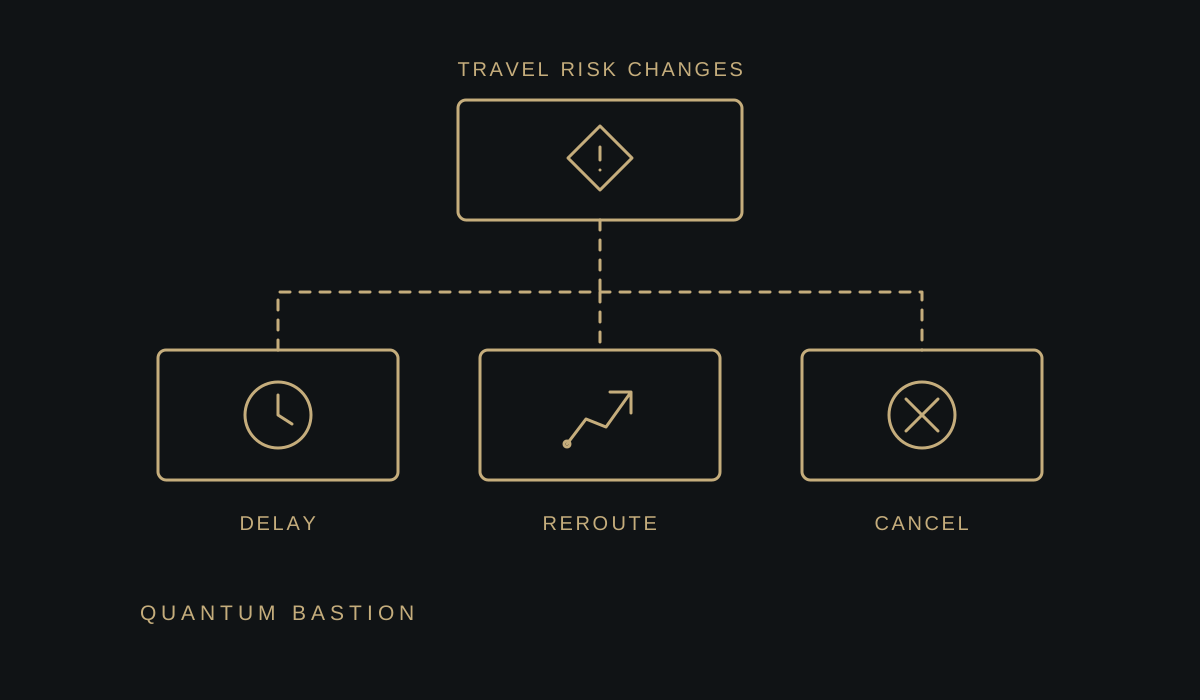
The itinerary is confirmed, the transfers are booked and everyone knows when to leave. Then a route closes, official advice changes or a key provider can no longer deliver. The team has to decide whether to delay, reroute or cancel, sometimes while people are already travelling.
For families, family offices and organisations, that decision is easier when the thresholds, authority and communication plan are agreed before departure. Our previous Insights article looked at how hotels, drivers and venues hand responsibility over. This one looks at who can change the itinerary when the assumptions behind it no longer hold.
Agree what would make you change course
Start with the conditions your trip depends on. What needs to remain true about the route, transport, accommodation and access to assistance? Turn those assumptions into clear triggers and actions.
For example, if a confirmed transfer falls through and a suitable replacement cannot be verified by the agreed cut-off, delay departure. If a route closes, assess the alternative before approving it: it may introduce a longer road journey, an overnight stop or a different border crossing. If the conditions needed for the trip cannot be restored within an acceptable window, cancel or postpone.
Use FCDO foreign travel advice as one input. Check it alongside the itinerary, the needs of the people travelling and what local providers can confirm.
Give someone authority to act
Name the person who can approve a change and a deputy who can act if they’re unavailable. Make clear which decisions the traveller or on-the-ground lead can take immediately and which need approval. Agree how long to wait for a response and what to do in the meantime.
Then decide who sends the update. A useful message tells travellers what has changed, what to do now, what to avoid and when they’ll hear from you again. Ask them to acknowledge it. Agree a backup channel and who will follow up if someone doesn’t respond.
Check how medical evacuation would be arranged
Medical evacuation is one contingency to plan for. Before travel, confirm who would call the insurer or assistance provider, whether the itinerary and planned activities are covered, and what authorisation is required. Keep the assistance number and policy details accessible offline. The FCDO’s travel insurance guidance is a useful starting point for what to check.
Try a short exercise before the next trip: the route becomes unavailable, the decision-maker is in the air and one traveller hasn’t acknowledged the update. Ask the deputy to make the call and draft the message they would send. Any hesitation gives you a specific point to fix.
If you’d like to review how your family or organisation makes travel decisions when circumstances change, speak to Quantum Bastion about international travel security.